Pier Paolo Pasolini


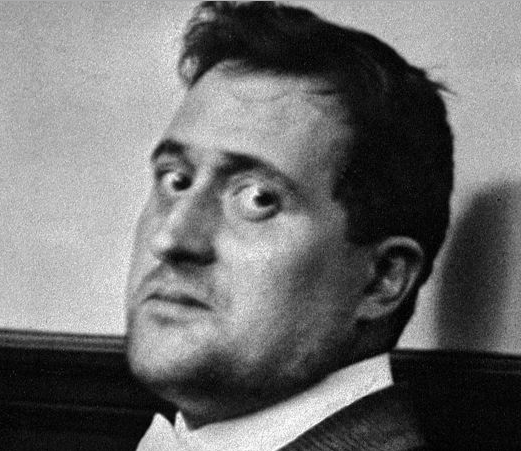
Pier Paolo Pasolini in New York, 1966. 

Bellsong

When evening ebbs in these fountains 
my home is a run colour. 

I am gone, I remember the frogs, 
the moon, the sad whirr of crickets. 

Vespers ring and waste on the fields: 
I am dead to the bellsong. 

Don't worry, stranger: my sweet flight aches 
over the empty land. I am a ghost of love 

who comes back to his home that was gone. 


My Deathday

In some city, Trieste or Udine, 
    along some limetreed street, 
in spring, while the leaves 
    are shifting colour, 
    I'll fall down dead 
under a throbbing sun, 
        blond, tall, 
and shut my eyes 
and leave the shining sky alone. 

Under a hot-green limetree 
    I'll fall down in death's 
dark, ungathering 
    the limes and the sun. 
    And beautiful boys 
will run in the light 
        I've lately lost 
hareing from school 
all tousled

                                translations by John Gallas 

Czeslaw Milosz


NOTHING MORE

I ought to tell you some time how my view 
Of poetry has changed, and how it came about 
That today I think of myself as merely one 
Of those craftsmen or merchants of Imperial Japan 
Who composed poems on how the cherry-tree blossoms, 
On chrysanthemums and the full moon. 

If I could describe that courtyard of Venetian courtesans, 
One of them teasing a peacock with a twig, 
And could peel the silken drape and the sash studded with pearls 
From the full weight of a breast and from the reddish 
Stripe on a belly where the dress had been fastened —
At least as the captain of the galleons saw it 
Whose fleet laden with gold sailed into port that morning; 

And if at the same time I could enshrine their poor bones 
— Now laid in the graveyard whose gate the fat sea licks —
In words more durable than the last of their hair-combs 
Which in dust under the slab, alone, waits for the light, 

Then I would have no doubts. What can be gathered 
From stubborn matter? Nothing: at most, beauty. 
And therefore we should be content with cherry blossom, 
With chrysanthemums and the fullness of the moon 

1957


Paul Celan

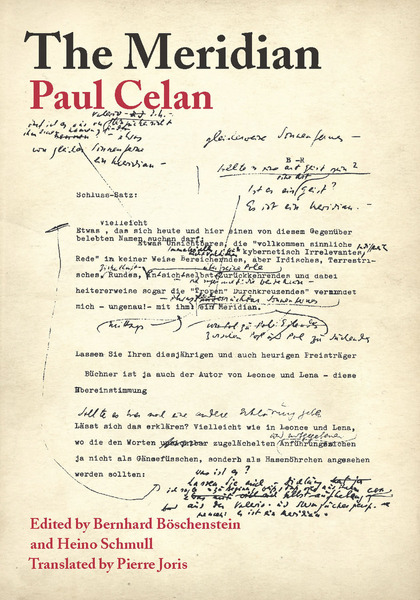
Cover of The Meridian by Paul Celan Edited by Bernhard Böschenstein and Heino Schmull Translated by Pierre Joris 

LANGUAGE MESH

Eye’s roundness between the bars.

Vibratile monad eyelid
propels itself upward,
releases a glance.

Iris, swimmer, dreamless and dreary:
the sky, heart-grey, must be near.

Athwart, in the iron holder,
the smoking splinter.
By its sense of light
you divine the soul.

(If I were like you. If you were like me.
Did we not stand
under one trade wind?
We are strangers.)

The flagstones. On them,
close to each other, the two
heart-grey puddles:
two
mouthsfull of silence.

                        Michael Hamburger, trans.

Robert Desnos


portrait de robert desnos by andré breton

                                            portrait by André Breton

 Hour farther witch art in Heaven

Hallowed bee, thine aim.
Thy king done come!
Thy will be done in
ersatz is in Heaven.

Kippers this day-hour,
Delhi bread.
And four kippers, sour trace, pa says.
As we four give them that trace paths against us.
Leader's not in to tempt Asians;
Butter liver (as from Eve)
fill our men.

****

Will the schist brighten the white night of Cork?
We'll be lost in midnight's corridor with calm horror of
the dying sob
Come all you ever-famous lizards climbing plants
digital flesheaters
Come vines
Whistle of revolts
Come giraffes
I invite you to a feast
So grand the light of the glasses will equal the aurora borealis
Womens' nails will be strangled swans
Not far from here a grass is drying by the roadside.

****

I am marked by my loves and for life
Like a wild horse escaped from the gauchos
Who, finding once more the prairies' freedom
Shows the mares his hair burned by branding

While on the deep sea with great virile gestures
The mermaid, singing toward a carbon sky
Amid reefs murderous to vessels,
In the heart of whirlwinds, makes the anemone flower.

Paul Valery

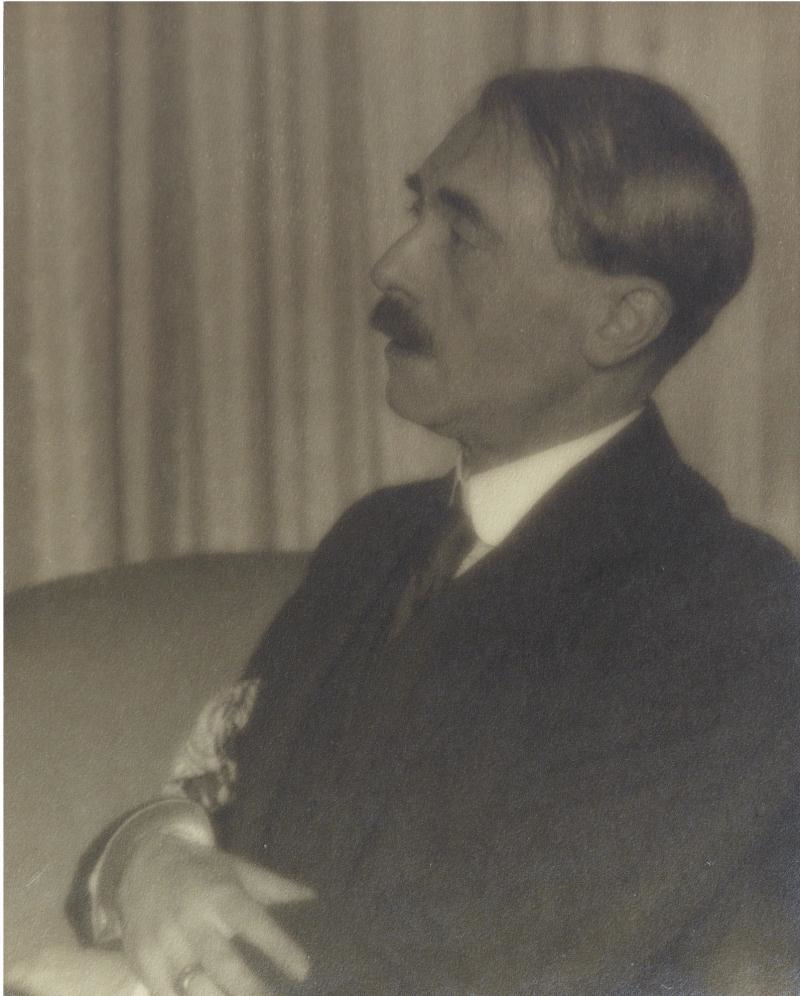
Artwork by Man Ray, Paul Valéry, Made of silver print

The Imaginary Dancers


Delicate as flowers they have come,

Slim figures sculpted out of gold,

Becoming iridescent in a feeble moon…They are here

In melodious flight through the shimmering wood.

Mauves, blues and the nocturnal rose

Weave a way below their surging dance.

What veils of perfume drape their gilded fingertips!

But the smooth blue sky is leafless in this barren grove

While the shallow lake offers little light, laid out

Like some deathly reservoir of age-old dew

Where flowering silence reaches up…They are here again

In melodious flight through the shimmering wood.

Their hands grace the adored chalice;

A glint of moonlight rests on consecrated lips

And under friendly myrtle the drowsy movement

Of their wondrous arms lovingly undoes

Their tawny and caressing hair…But some of them,

Less in thrall to rhythm and distant harps,

Move with secret steps towards the shrouded lake

To drink the lilies’ dew immersed in pure forgetfulness.

                                                                            translated by Ian Britton & Michael Grant


Guillaume Apollinaire


Guillaume Apollinaire


“Aubade Sung at Laetare a Year Ago”


It’s spring come out Esther you should
Take a walk in the pretty woods
The hens are clucking in the yard
Dawn’s pink folds are shooting skyward
And love is coming to steal your heart

Mars and Venus have come back anew
They give each other mad kisses
An innocent interlude
While beneath the fluttering roses
Lovely pink gods are dancing nude

So come my tenderness is queen
Of this flowering that appears
Nature is beautiful and touching
Pan is whistling in the trees
The wet frogs are singing

                                                translated by Ron Padgett

Robert Desnos


ob_6f6aac_desnos-photo-par-man-ray1

 par Man Ray

Desnos’s Chantefables, each of which focuses on an animal, were immediately popular. One of his friends, hiding from German pursuers in an attic in the Dordogne, remembered hearing children playing outside and reciting La sauterelle from the poet’s newly published book:

Saute, saute, sauterelle
Car c’est aujourd’hui jeudi.
Je sauterai, nous dit-elle,
Du lundi au samedi.

Saute, saute, sauterelle,
À travers tout le quartier.
Sautez donc, mademoiselle,
Puisque c’est votre métier.

Hop, grasshopper, hop away,
Thursday, Friday, Saturday.
I shall hop, we heard her say,
From Monday to the latter day.

Hop, grasshopper, hop away,
All around the quarter,
Hop, that’s your job all day,
Being your mother’s daughter.
(That’s what they taught her.)i

A poem such as ‘La fourmi’ lends itself to an even more sombre interpretation:

Une fourmi de dix-huit mètres
Avec un chapeau sur la tête,
Ça n’existe pas, ça n’existe pas.
Une fourmi traînant un char
Plein de pingouins et de canards,
Ça n’existe pas, ça n’existe pas.
Une fourmi parlant français,
Parlant latin et javanais,
Ça n’existe pas, ça n’existe pas.
            Eh! Pourquoi pas?

Ant, an eighteen-metre ant,
Hat on head insouciant,
Cannot happen on this planet.
Ant that hauls a pair of trucks
Crammed with penguins and with ducks,
Cannot happen on this planet.
Ant that spouts with fluent ease
Latin, French and Javanese,
Cannot happen on this planet.
            Or can it?


Fernando Pessoa/Alvaro de Campos

  I Got Off the Train I got off the train And said goodbye to the man I'd met. We'd been together for eighteen hours And had a pleas...