Showing posts with label italian. Show all posts

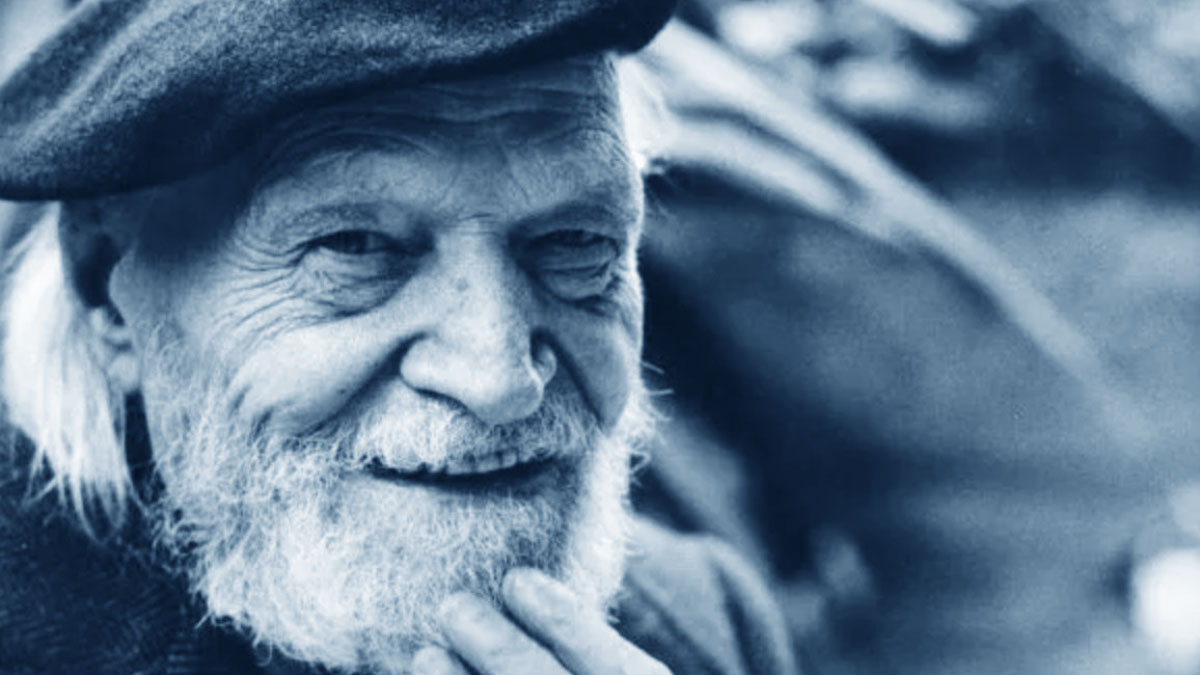
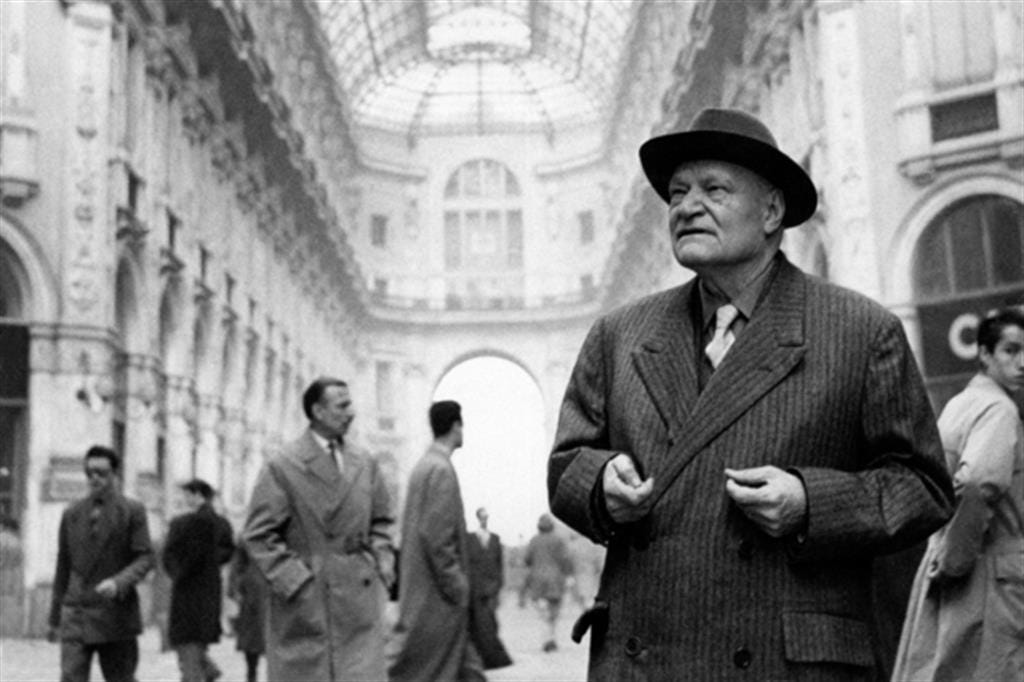
Eugenio Montale

 “The Blackcap Wasn’t Killed”

The blackcap wasn’t killed
by a hunter,
so far as I know.
Perhaps she died mid-morning. And I never
got the news. Regarding me, I suppose
she had lost all recollection. If some
ghostly presence flutters around here now,
I can’t capture it to ask: “Who are you?”
It may be that ghosts have no more substance
than a faint breath of wind. Perhaps I, too,
am just one of these puffs and don’t know it,
a breeze so light the cardboard stage-set
that surrounds me manages to stand upright.
To destroy it will take different gusts entirely.
Where will they take refuge then, these stray
bits of gossamer?
There exists no science,
philosophy, theology that concerns itself with them.

The Allegory

The meaning of the plot is unclear
even to those whom it concerns.

We’re just supporting actors, prompters in the pit,
but the story line is in the hands of others.
Clearly we’re dealing with an allegory
lasting an infinitude of centuries, assuming
that time exists, or rather that it is not part
of some great machination, divine or otherwise.
There are those who posit thingamajigs causing
the whole of everything to collapse into itself.
But you don’t believe this. The rapture of lunatics
is somebody else’s business.
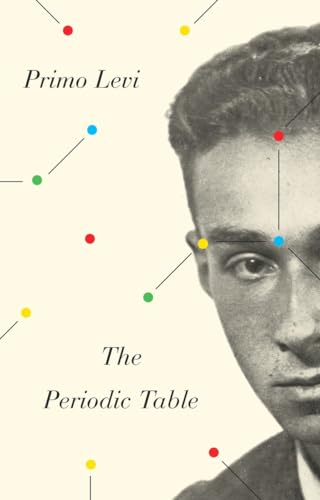
Primo Levi


Agave

I am neither useful nor beautiful, 
Have no pleasing colours or scents; 
My roots eat into cement, 
And my thorn-edged leaves - 
Sharp as swords - protect me. 
I'm mute. I speak only my plant language, 
Hard for you, man, to understand: 
An out-of-use language, 
Exotic, since I come from far away, 
From a cruel country 
Full of wind, poisons and volcanoes. 
I've waited many years before sending up 
This towering desperate flower of mine, 
Ugly, wooden, stiff, but stretching towards the sky. 
It's our way of shouting: 
I'll die tomorrow. Now do you understand?


                                        Translated by Ruth Feldman


Pier Paolo Pasolini


Pier Paolo Pasolini in New York, 1966. 

Bellsong

When evening ebbs in these fountains 
my home is a run colour. 

I am gone, I remember the frogs, 
the moon, the sad whirr of crickets. 

Vespers ring and waste on the fields: 
I am dead to the bellsong. 

Don't worry, stranger: my sweet flight aches 
over the empty land. I am a ghost of love 

who comes back to his home that was gone. 


My Deathday

In some city, Trieste or Udine, 
    along some limetreed street, 
in spring, while the leaves 
    are shifting colour, 
    I'll fall down dead 
under a throbbing sun, 
        blond, tall, 
and shut my eyes 
and leave the shining sky alone. 

Under a hot-green limetree 
    I'll fall down in death's 
dark, ungathering 
    the limes and the sun. 
    And beautiful boys 
will run in the light 
        I've lately lost 
hareing from school 
all tousled

                                translations by John Gallas 

Filippo Tomasso Marinetti


Marinetti (1876-1944)

'Multiplied Man and the Reign of the Machine' 1911

Quote of F.T. Marinetti, from his text 'Multiplied Man and the Reign of the Machine,' 1911 - original Italian title 'L'uomo moltiplicato e il Regno della macchina' 
  • All this will have left you disposed to understand one of our principal Futurist efforts, which consists of abolishing in literature the apparently indissoluble fusion of the two concepts of Woman and Beauty. This ideological a fusion has reduced all romance to a sort of heroic assault that a bellicose and lyrical male launches against a tower that bristles with enemies, a story which ends when the hero, now beneath starlight, carries the divine Beauty-Woman away to new heights. Novels such as Toilers of the Sea by Victor Hugo or Salammbô by Flaubert can clarify my point. It is a matter of a dominant leitmotif, already worn out,c of which we would like to disencumber literature and art in general.
    • In: Poggi, Christine, and Laura Wittman, eds. Futurism: An Anthology. Yale University Press, 2009. p. 89
  • It is therefore necessary to prepare the imminent and inevitable identification of man with the motor, facilitating and perfecting an incessant exchange of intuition, rhythm, instinct and metallic discipline, quite utterly unknown to the majority of humanity and only divined by the most lucid mind.
    • In: Günter Berghaus (2000) International Futurism in Arts and Literature. p. 318


Giuseppi Ungaretti

Giuseppe Ungaretti

Prayer

Parigi – Milano 1919

When I awake

from inflamed profligacy

within a crystalline, astonished space

When my weight becomes light once again

The shipwreck endows me, Lord

the first exclamation of a new day

Giuseppi Ungaretti


Giuseppe Ungaretti Writer Pictures 


         Sea's shifting landscapes no longer

Lead me, or lacerating

Pallor of dawn on these or those leaves;

Old night I carry on my eyes,

I cannot set against the block.

Forgotten, what

Do I want with images? 


                            Translation by Andrew Wylie

Giuseppi Ungaretti

11 Maggio 1912: Marinetti e il Manifesto della Letteratura Futurista

Italy

 I am a poet, a unanimous 

cry, am 
a cleat of dreams 

a fruit 
of innumerable conflicting grafts 
ripened in the hothouse 

But the same earth bears 
your people 
as carries me 

Italy 

In this, the uniform 
of your soldier, I rest 
as if 
it were the cradle 
of my father 

Cease murdering the dead. 
If you hope not to perish, if you 
Want sound of them again, 
Stop crying out, cease 
The crying out of it. 

They have a barely heard whispering, 
No more than the increase of grass, 
Happy where no man passes.

Giuseppe Ungaretti

“My Rivers”

I cling to this wounded tree
forsaken in this sinkhole
that feels as dull
as a circus
before or after the show
and I watch
the calm passage
of clouds across the moon

This morning I stretched out
in an urn of water
and like a relic
rested

The Isonzo as it flowed
polished me
like one of its stones

I lifted
my bones
and walked out

                translated by Geoffrey Brock

Giorgio Orelli

In autumn

Catlike in the salamander’s
slimy yellow
between the hedge and the tarmac: I didn’t even
see the face of the boy who
almost ran over me at the bend with his bike.
The rain was hosing down sideways
so much that it darkened the mood of the cows
near the high school:
in groups, dazed,
they forsook the grass,
and lowed miserably at the sky.

                            translation by Marco Sanzongi

Giorgio Orelli


Giorgio Orelli

Carnival at Prato Levantina

This is the Undone Sunday,
without a cry or flight from the strange
gashes in the sky.
                   But the hares
ran invisible over the snowy
lawns, and discreet designs remain
from the silent orgy.

Children hidden in old men
with light humpbacks and heavy heads
return home taciturn
after dinner, greeting
with resigned gestures.
                   I follow from a distance
as they sink gently into the snow.

                                                                        translation by Lynne Lawner

Sandro Penna


unnamed.jpg

n his poetry Penna clearly says who he is and how he feels. That is a rare enough quality these days. He moves away from the trappings of identity toward an honest expression of love. In Penna’s work the beautiful is not conscious of itself and is therefore erotic: “Is not the beauty of those who are unaware of their beauty / more beautiful than those who are aware?” He is critical of those who hide their desires behind a thin façade of modesty:

Here they are, these lords of life.

They are very modest, indeed.

Even with their senses fully aroused,

they manage to offend no one.

Penna never hid his sexuality in interviews. He once told a reporter (who probably had to pay dearly for the interview), “I am not a homosexual. I am a pederasta.…Homosexuality is a privilege.” Penna’s homosexuality is complicated in one sense by a moral dilemma:

The problem of sex

consumes my entire life.

I wonder at each moment

whether I am doing the right thing

or the wrong.

But there is another sense in which Penna accepts the impossibility of a moral resolution to his “problem” and instead turns this negative to a positive value:

There are always boys in my poems.

But I do not know how to speak of anything else.

Everything else is just a tedious noise.

I am unable to sing of Good Deeds.

Since his poems chiefly concern homosexual love, they face being relegated to a gay-only ghetto of readers or to another ghetto that even homosexuals avoid: pederastia. This is a problematic issue in the United States where scandal surrounding sexual orientation is still prevalent. But more importantly, there are no glamorous pronouncements or concern with gender politics in Penna’s poetry. You also won’t find a vision of historical process or a mass of physical details. What you will find is an attachment to everyday reality. Penna’s poetry is candid, uncluttered, minimalist, and of profound lyrical intensity and as Pasolini, a great supporter of Penna’s work, wrote in the 1970 preface to Penna’s collected poems, he is, “perhaps t

Sandro Penna

250420101238Penna anni trenta


I have found my little angel

amid a shady audience.
Smoking a small cigar
and with shining eyes..


Eugenio Montale

images/dentro-il-libro-eugenio-montale-e-il-dottor-zivago-incompreso.jpg


Little Testament

This, which flickers at night
in the skullcap of my thought,
mother-of-pearl trace of a snail
or mica of crushed glass,
isn’t church or workshop light
fed
by red cleric or black.
All I can leave you is

this rainbow in evidence
of a faith that was fought for,
a hope that burned more slowly
than hardwood on the hearth.
Keep its ash in your compact
till every lamp is out
and the din becomes infernal
and a shadowy Lucifer sweeps down on a prow
on the Thames the Hudson the Seine
beating his wings of coal half-
severed from effort, to tell you: It’s time.
It’s no inheritance, no talisman
to calm the monsoons’ blast
on the spider’s thread of memory,
but a story only survives in ashes
and persistence is simply extinction.
The sign was right: he who saw it
can’t fail to find you again.
Everyone makes out his own:
pride wasn’t flight, humility wasn’t craven,
the thin glimmer striking down there

Fernando Pessoa/Alvaro de Campos

  I Got Off the Train I got off the train And said goodbye to the man I'd met. We'd been together for eighteen hours And had a pleas...