Showing posts with label peruvian. Show all posts

Mario Vargas on Cortazar


File:Cortazar2.jpg 


from City of Exiles: When Mario Vargas Llosa Met Julio Cortázar in Paris

In those years he was writing Hopscotch, and one of the things that most surprised me, me for whom it took a lot of work to write, was to see the ease with which he wrote such a complex novel, practically without a plan, without a script, without a previous outline. Many times, I heard him say, “Today, I don’t know where the novel will go.” What he most liked was precisely that feeling of risk, of insecurity, that was sitting down every morning without any preconceived plan, to move forward the novel he was writing, and which, as you know, made him enormously popular. I think, nonetheless, that at some point, Cortázar experienced a sort of trauma or interior revolution that completely changed his personality. This secret, intimate, private character, suddenly turned public, began to live on the streets, let an enormous red beard grow, began to show interest in the politics that he previously deplored, and became a young revolutionary when he was on the verge of turning 60. And a problematic, belligerent, and, I believe, enormously naïve and simultaneously extremely pure revolutionary, without any of those stumbling blocks that often turn politics into an activity or task that corrupts and psychologically and morally degrades some of its devotees. I think that he was innocent, authentic, although I don’t think he was always right in his political choices.

Translated by Anna Kushner.
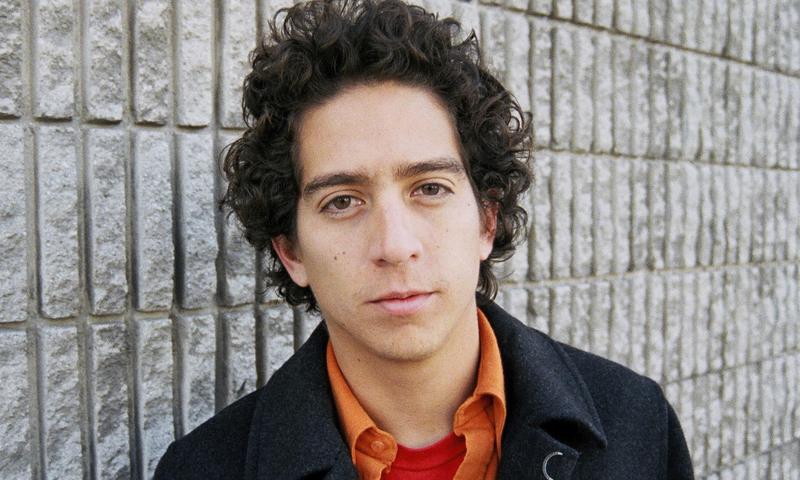


Daniel Alarcon


except from At Night We Walk in Circles

DURING THE WAR—which Nelson’s father called the anxious years—a few radical students at the Conservatory founded a theater company. They read the French surrealists, and improvised adaptations of Quechua myths; they smoked cheap tobacco, and sang protest songs with vulgar lyrics. They laughed in public as if it were a political act, baring their teeth and frightening children. Their ranks were drawn, broadly speaking, from the following overlapping circles of youth: the longhairs, the working class, the sex-crazed, the poseurs, the provincials, the alcoholics, the emotionally needy, the rabble-rousers, the opportunists, the punks, the hangers-on, and the obsessed. Nelson was just a boy then: moody, thoughtful, growing up in a suburb of the capital with his head bent over a book. He was secretly in love with a slight, brown-haired girl from school, with whom he’d exchanged actual words on only a handful of occasions. At night, Nelson imagined the dialogues they would have one day, he and this waifish, perfectly ordinary girl whom he loved. Sometimes he would act these out for his brother, Francisco. Neither had ever been to the theater.


Daniel Alarcon


excerpt from Lost City Radio


 "Yes," Victor said. 

"Do you know him?" 

Norma didn't. 

"He says he came from the jungle," Len continued. "We thought you'd want to meet him. For the show." 

"Great," she said. "Thank you." 

Elmer stood and walked to the window. He was a silhouette against the hazy brightness. Norma knew that panorama: the city below, stretching to the horizon and still farther. With your forehead to the glass, you could see down to the street, to that broad avenue choked with traffic and people, with buses and moto-taxis and vegetable carts. Or life on the city's rooftops: clothes hanging on a line next to rusting chicken coops, old men playing cards on a milk crate, dogs barking angrily, teeth bared at the heavy sea air. She'd even seen a man once, sitting on his yellow hard hat, sobbing. 

If Elmer saw anything now, he didn't seem interested. He turned back to them. "Not just from the jungle, Norma. From 1797." 

Norma sat up straight. "What are you telling me, Elmer?" 

It was one of the rumors they knew to be true: mass graves, anonymous villagers, murdered and tossed into ditches. They'd never reported it, of course. No one had. They hadn't spoken of this in years. She felt something heavy in her chest. 

"It's probably nothing," Elmer said. "Let's show her the note." 

From his pocket, Victor produced a piece of paper, presumably the same one he had shown the receptionist. He passed it to Elmer, who put on his reading glasses and cleared his throat. He read aloud: 

Dear Miss Norma: 

This child is named Victor. He is from Village 1797 in the eastern jungle. We, the residents of 1797, have pooled our monies together and sent him to the city. We want a better life for Victor. There is no future for him here. Please help us. Attached find our list of lost people. Perhaps one of these individuals will be able to care for the boy. We listen to Lost City Radio every week. We love your show. 

Your biggest fans,
Village 1797 


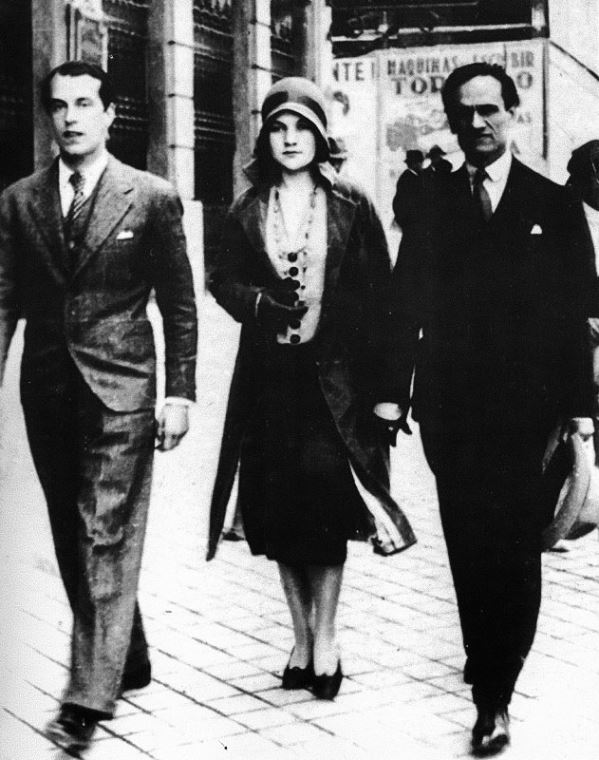
Cesar Vallejo


  with Rafael Alberti and Georgette Philippart, Madrid (1931)


Paris, October 1936

From all of this I am the only one who leaves.
From this bench I go away, from my pants,
from my great situation, from my actions,
from my number split side to side,
from all of this I am the only one who leaves.

From the Champs Elysées or as the strange
alley of the Moon makes a turn,
my death goes away, my cradle leaves,
and, surrounded by people, alone, cut loose,
my human resemblance turns around
and dispatches its shadows one by one.

And I move away from everything, since everything
remains to create my alibi:
my shoe, its eyelet, as well as its mud
and even the bend in the elbow
of my own buttoned shirt.


Cesar Vallejo


Uno de los cuentos más famosos de César Vallejo es Paco Yunque, publicado después de su muerte.


To My Brother Miguel in Memorium

Brother, today I sit on the brick bench of the house,

where you make a bottomless emptiness.
I remember we used to play at this hour, and mama
caressed us: "But, sons..."

Now I go hide
as before, from all evening
lectures, and I trust you not to give me away.
Through the parlor, the vestibule, the corridors.
Later, you hide, and I do not give you away.
I remember we made ourselves cry,
brother, from so much laughing.

Miguel, you went into hiding
one night in August, toward dawn,
but, instead of chuckling, you were sad.
And the twin heart of those dead evenings
grew annoyed at not finding you. And now
a shadow falls on my soul.

Listen, brother, don't be late
coming out. All right? Mama might worry.

(translated by James Wright)

Cesar Vallejo


Black stone/White stone

I shall die in Paris, in a rainstorm,
On a day I already remember.
I shall die in Paris-- it does not bother me--
Doubtless on a Thursday, like today, in autumn.

It shall be a Thursday, because today, Thursday
As I put down these lines, I have set my shoulders
To the evil. Never like today have I turned,
And headed my whole journey to the ways where I am alone.

César Vallejo is dead. They struck him,
All of them, though he did nothing to them,
They hit him hard with a stick and hard also
With the end of a rope. Witnesses are: the Thursdays,

The shoulder bones, the loneliness, the rain, and the roads... 

Cesar Vallejo

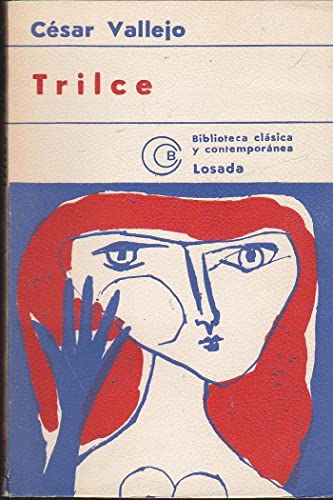
Trilce (9789500390101) by Cesar Vallejo


Black stone/White stone

 I will die in Paris, on a rainy day,

on some day I can already remember.
I will die in Paris–and I don’t step aside—
perhaps on a Thursday, as today is Thursday, in autumn.

It will be a Thursday, because today, Thursday, setting down
these lines, I have put my upper arm bones on
wrong, and never so much as today have I found myself
with all the road ahead of me, alone.

Cesar Vallejo is dead. Everyone beat him
although he never does anything to them;
they beat him hard with a stick and hard also

with a rope. These are the witnesses:
the Thursdays, and the bones of my arms,

the solitude, and the rain, and the roads… 


Cesar Vallejo

 Our Daily Bread 

(for Alejandro Gamboa)

Breakfast is drunk... Moist earth
Of the cemetery smells of the beloved blood.
Winter city... The biting crossing
Of a cart that appears to drag down
An emotion of fasting in chains!

I want to knock on all doors.
And ask for I don’t know whom; and then
To see the poor, and, weeping silences,
To give fragments of fresh bread to everyone.
To sack the vineyards of the rich
With two sacred hands
That a blaze of light
Set flying loose from the nails of the Cross!

Morning eyelids, don’t open! 
Give us our daily bread, 
Lord...!

All my bones are strangers;
Perhaps 1 stole them!

I come to give myself what was perhaps
Assigned to someone else;
And I think that, if I had not been born,
Some other poor fellow would be drinking this coffee!
I am an evil thief... Where shall I go?

In this cold time in which the earth 
Transcends human dust and is so sad, 
I want to knock on every door. 
And beg pardon of I don’t know whom. 
And make them slices of fresh bread 
Here, in the oven of my heart...!

                                    From The Black Messengers (1918)

Fernando Pessoa/Alvaro de Campos

  I Got Off the Train I got off the train And said goodbye to the man I'd met. We'd been together for eighteen hours And had a pleas...